

Honest Buying Guide

Projector Brightness, Explained Honestly

The lumens number on a spec sheet and the picture you see on your wall are two different things — for every projector brand in the world. Five minutes here and you’ll read brightness claims like a professional reviewer.

সংক্ষেপে: স্পেক শিটের লুমেন্স সংখ্যাটি মাপা হয় প্রজেক্টরের আলোর উৎসে (LED/ল্যাম্পে) — এটাই সারা বিশ্বের প্রজেক্টর ইন্ডাস্ট্রির নিয়ম। কিন্তু লেন্স ও অপটিক্স পার হয়ে দেয়ালে যে আলো পৌঁছায়, তা সব ব্র্যান্ডের ক্ষেত্রেই রেটেড সংখ্যার চেয়ে অনেক কম। তাই সংখ্যা নয় — আপনার ঘরের আলো, পর্দার সাইজ আর বাস্তব ছবির প্রমাণ দেখে প্রজেক্টর বাছাই করুন। নিচে বিস্তারিত পড়ুন।

One Projector, Two Very Different Numbers

Almost every projector brand — global names and budget brands alike — prints the brightness of the light source on the spec sheet. But light has a journey to make before it reaches your wall, and it pays a toll at every step:

1. The Light Source

The raw brightness of the LED or lamp itself.

Spec-sheet “rated lumens” are measured HERE

2. The Lens & Optics

Light passes through the LCD panel, filters and lens system.

A large share of the light is lost here — on EVERY projector

3. Your Screen

The brightness you actually watch every day.

Always well below the rated figure — often around half or less

This is not a trick by any one company — it is how the whole industry quotes brightness, the same way a car’s top speed is measured on a test track, not in Dhaka traffic. The mistake is comparing a spec-sheet number with what you expect to see on the wall.

How Professionals Measure Real Brightness

Professional reviewers and test labs don’t measure the lamp — they measure the screen. The international standard (known as ANSI / ISO 21118) works like this:

  • Project a pure white image in a dark room.
  • Measure the light at 9 points across the screen with a lux meter.
  • Average the 9 readings and multiply by the screen area.

The result — often called ANSI lumens — is real, on-screen brightness. It is always dramatically lower than the light-source rating on the box, for premium brands and budget brands alike. That’s why a projector reviewed at a few hundred ANSI lumens can carry a spec sheet claiming several thousand.

Rule of thumb: when you see a big lumens claim anywhere online, mentally cut it in half (or more) to estimate real on-screen brightness. Apply that rule to every brand equally — then compare.

9 lux readings × screen area = real screen brightness

The ANSI / ISO 21118 nine-point measurement grid

Forget the Number War — Match the Projector to Your Room

Since every brand’s spec number is a light-source rating, comparing numbers tells you very little. What actually decides your picture quality is your room:

Pitch-black room
Lights off, curtains closed
Any good home projector looks stunning — deep colours, giant 100″+ screens. Brightness is the least of your worries here.
Dim room
Some ambient light, evening viewing
Most home projectors do well. Keep the screen away from windows and prefer a mid-to-high-brightness model for larger screens.
Daylight / office lights
Windows open, classes & meetings
The hardest test for any projector at any price. Choose the brightest suitable model, keep the image size moderate, close curtains where possible — an ALR (ambient-light-rejecting) screen helps a lot.

Answer 5 quick questions about your room and our engine matches the right AUN model to your lighting — no spec-sheet decoding needed.

Use the 60-Second Smart Finder

Our Answer to the Number War: Proof, Not Promises

Numbers can be argued about. A photograph cannot. Instead of selling you a figure, we show you exactly what our projectors do in real Bangladeshi rooms — and you judge with your own eyes.

Real Projection Photos

Unedited photos on every product page, shot from the actual unit — never manufacturer renders or studio mockups.

Real Video Demos

Hands-on videos of every model in action — focus speed, picture quality, real rooms, real lighting.

Honest Human Advice

Tell us your room on WhatsApp and we’ll tell you plainly which model fits — including when a cheaper one is enough.

Watch a Real Factory Brightness Test

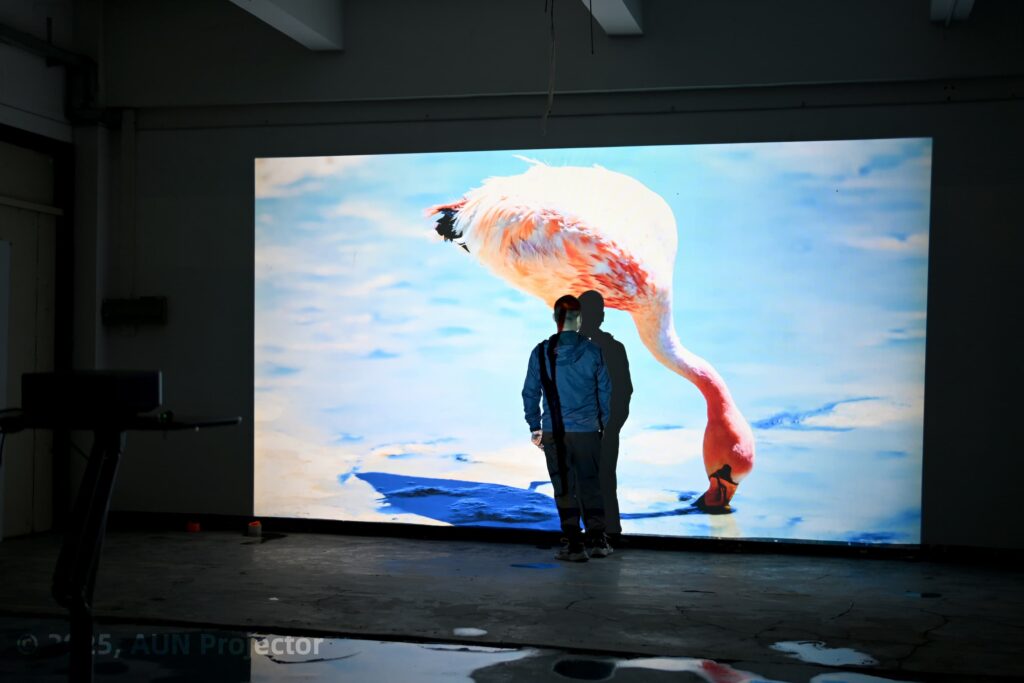
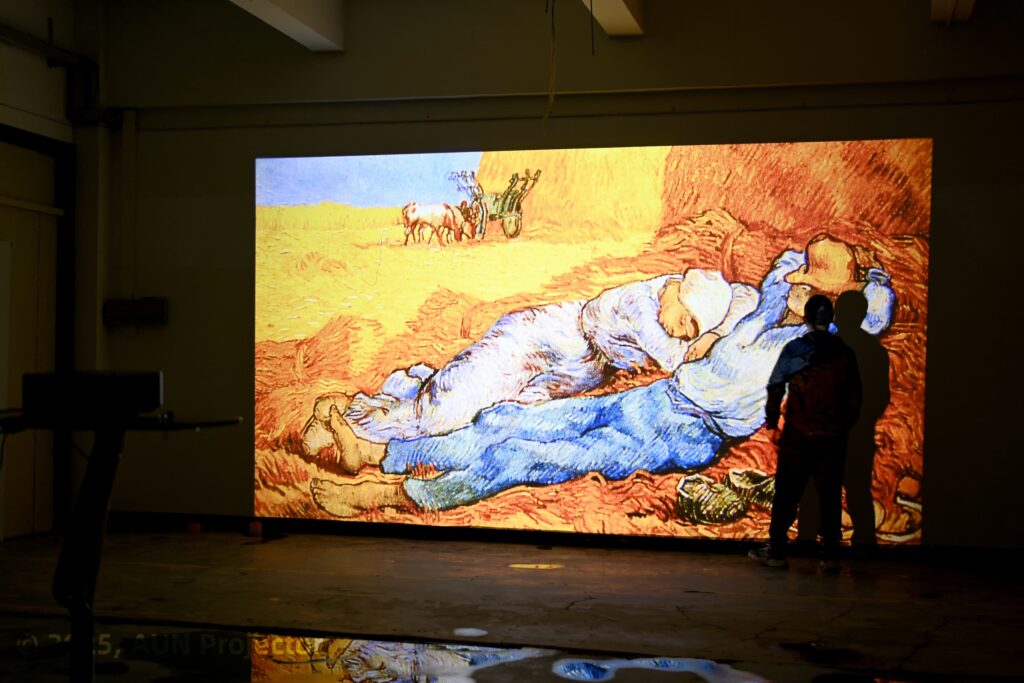
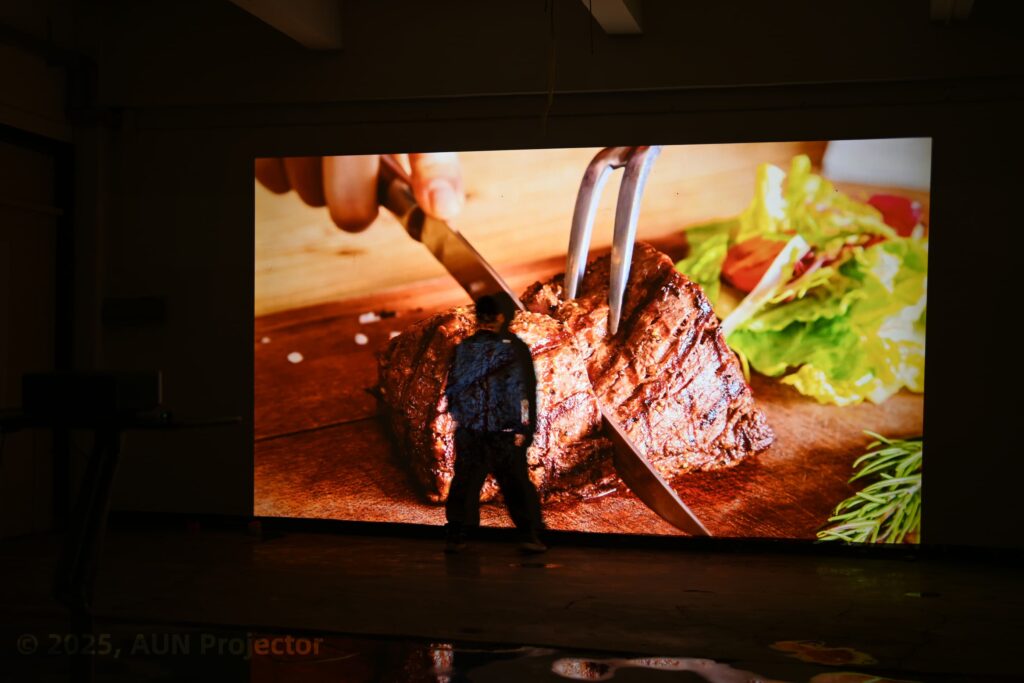
This is the exact 9-point lux-meter method you read about above — performed on real AUN units at the factory, and published here unedited. We are, as far as we know, the only projector seller in Bangladesh that shows you the actual measurement instead of asking you to trust a number. Watch the meter yourself.

Left to right: U002 · U001 · A004 Pro — factory 9-point lux-meter tests, unedited

Photographed from actual AUN projectors in action — not mockups or manufacturer renders.

Frequently Asked Questions — Projector Brightness

Why does my projector look dimmer than the number on the box?
Because the box number is measured at the light source, before the light passes through the panel, filters and lens — and that is true for virtually every projector brand in the world. Real on-screen brightness is always well below the rated figure. Your projector isn’t faulty; the industry’s numbering convention is just generous.
What are ANSI lumens?
ANSI lumens (standardised today as ISO 21118) measure brightness on the screen: a white image is measured at 9 points with a lux meter, averaged, and multiplied by the screen area. It’s the method professional reviewers use, and it always produces a much lower — but far more realistic — figure than the light-source rating printed on spec sheets.
Are the brightness figures on AUN spec sheets real?
The figures we publish are the manufacturer’s official light-source ratings — the same convention nearly every projector brand uses, which is why we label them “Manufacturer Rated”. On-screen brightness is lower than the rated figure for every projector on the market, including ours. That’s exactly why we never sell on numbers alone: every product page tells you honestly which rooms the model suits (“shines in dim or dark rooms — close the curtains in daytime”) and shows real, unedited projection photos so you can judge with your own eyes before you buy.
A marketplace listing claims 8,000 or 12,000 lumens for a cheap projector. Should I believe it?
Be careful. Unbranded marketplace projectors often print numbers with no measurement standard behind them at all — a “12,000 lumen” no-name unit can look dimmer on the wall than a properly engineered projector rated far lower. Apply the same rule to every listing: ignore the number, look for real projection photos, real video demos, a real warranty, and a seller who will answer for the product after the sale.
Can any home projector beat full daylight?
Honestly — no. Direct sunlight washes out every home projector at every price, ours included. For daytime viewing: close the curtains, keep the image size moderate, and consider an ALR (ambient-light-rejecting) screen, which visibly improves contrast in lit rooms.
So how do I actually choose the right brightness?
Start from your room, not the spec sheet: how much light it has, how big you want the picture, and how far the projector sits from the wall. Our 60-Second Smart Finder asks exactly these questions and recommends the best-matched AUN model — or message us on WhatsApp and a real person will advise you honestly.

Browse All Projectors

See the current AUN lineup with honest room-by-room guidance on every page.

Projector Price in Bangladesh →

Smart Projector Finder

5 questions about your room — get the right model matched to your lighting and budget.

Find My Projector →

Ask a Human

Tell us your room and budget on WhatsApp — we’ll recommend honestly, even if it’s the cheaper model.

Chat on WhatsApp →